BMI vs Body Fat Percentage: Which One Should You Actually Trust?
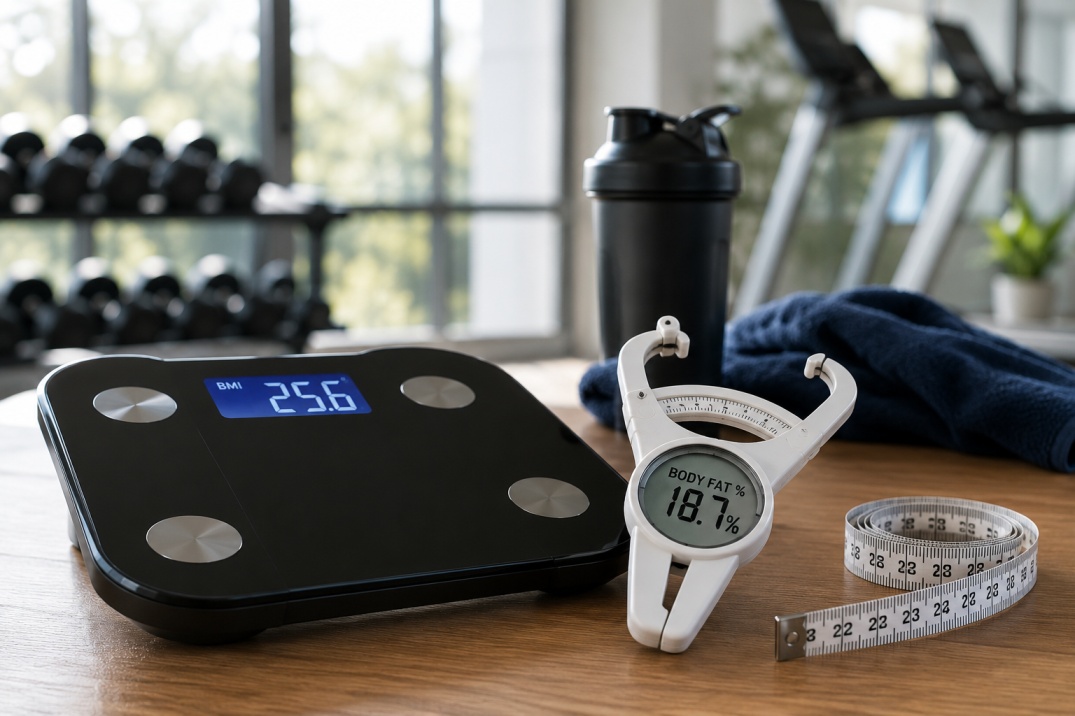
A friend of mine lifts four days a week, has a visible six-pack, and still gets flagged as "overweight" every time he plugs his numbers into a BMI calculator. He's not an edge case. Any reasonably muscular person runs into the same thing, because BMI has no idea whether your weight is muscle or fat. The BMI vs body fat percentage debate isn't really a debate once you understand what each number is actually measuring, and what it isn't.
What BMI Actually Measures (and What It Doesn't)
BMI is weight in kilograms divided by height in meters squared. That's the whole formula. It was designed in the 1830s by a Belgian statistician to describe population averages, not to diagnose an individual person's health, and the WHO categories built on top of it (underweight below 18.5, normal 18.5–24.9, overweight 25–29.9, obese 30 and above) inherited that limitation.
The problem is obvious once you say it out loud: BMI can't distinguish between 10 kg of muscle and 10 kg of fat. Two people can have the identical height, weight, and BMI, and one of them can have a body fat percentage in the athletic range while the other is carrying enough fat to be a real health risk. Our BMI calculator is useful as a fast first check, but it was never built to be the final word.
Is BMI Accurate? Where It Breaks Down
BMI works reasonably well as a population-level screening tool, and reasonably badly as an individual diagnostic, in a few specific situations:
- Muscular or athletic people get pushed into "overweight" or even "obese" categories purely because muscle is denser than fat and weighs more per unit of volume.
- Older adults can have a "normal" BMI while carrying dangerously high body fat, because muscle loss with age quietly replaces lean mass with fat without moving the scale much. Doctors call this "normal weight obesity," and it's one of the more dangerous blind spots in BMI-only screening.
- Body composition differences across populations mean the same BMI number can carry different health risk depending on where fat tends to be distributed, something a single height-weight ratio can't capture at all.
None of this means BMI is useless. It's cheap, instant, and correlates reasonably well with health risk across large populations. It just means one number shouldn't be the whole story for any one individual.
What Body Fat Percentage Tells You Instead
Body fat percentage measures what fraction of your total body weight is actually fat, as opposed to muscle, bone, and water. It answers the question BMI can't: is this weight fat, or is it something else?
Our body fat calculator uses the US Navy method, a circumference-based formula using your neck, waist (and hip, for women) measurements alongside height. It's not lab-grade precise the way a DEXA scan is, but it's far closer to reality than BMI for anyone whose body composition sits outside "average," and all it needs is a tape measure.
| BMI Category | What It Actually Tells You |
|---|---|
| Underweight (below 18.5) | Low weight relative to height |
| Normal (18.5–24.9) | Weight within the population average range |
| Overweight (25–29.9) | Weight above the population average — could be fat or muscle |
| Obese (30+) | Weight well above average — doesn't specify composition |
| Body Fat Category | Range | What It Actually Tells You |
|---|---|---|
| Essential fat | Below 6% | Minimum fat needed for basic body function |
| Athletes | 6–14% | Low fat, typically visible muscle definition |
| Fitness | 14–18% | Lean, active build |
| Average | 18–25% | Typical range for a moderately active adult |
| Above average | 25%+ | Higher fat, greater associated health risk |
These are general ranges built into the Navy method's original research population; women naturally carry a few percentage points more essential fat than men, so treat the low end of each band as a looser fit if you're female.
A Real Example: Same BMI, Different Body Fat
Take two men, both 5'10" (178 cm) and 190 lb (86 kg). Both land at a BMI of 27.2 — squarely "overweight" by WHO standards.
The first is a recreational weightlifter with a 15-inch neck, 34-inch waist. Run those numbers through the US Navy method and his body fat comes out around 17%, in the "fitness" range. The second rarely exercises, with the same 15-inch neck but a 40-inch waist — body fat lands closer to 28%, "above average," with real cardiometabolic risk attached.
Identical height, identical weight, identical BMI, genuinely different health pictures. That gap is exactly what body fat percentage is built to catch and BMI is built to miss.
So Which Number Should You Actually Use?
Use BMI as a two-second sanity check, nothing more. If you're an athlete, lift regularly, are over 50, or your BMI result just doesn't match how you look and feel, don't stop there — run your measurements through a body fat calculator to see what's actually driving the number. For most people trying to track real body composition changes over time (losing fat while maintaining muscle, for instance), body fat percentage is the far more honest number to watch month over month, while BMI barely moves.
FAQ
Is BMI accurate for athletes? Not reliably. Muscle mass pushes BMI upward the same way fat does, so athletic and muscular people are routinely misclassified as overweight or obese by BMI alone, even at very low body fat percentages.
What's a healthy body fat percentage? Roughly 14–25% is considered a typical healthy-to-athletic range on the US Navy method's scale, with women generally sitting a few points higher than men at the same fitness level due to essential fat differences. Our body fat calculator breaks this down further by category.
Can I have a normal BMI and still have high body fat? Yes — this is sometimes called "normal weight obesity," most common in older adults or anyone who has lost muscle mass over time without losing overall weight. It's one of BMI's biggest blind spots.
How is body fat percentage calculated without expensive equipment? The US Navy method estimates body fat from neck, waist, and (for women) hip circumference measurements plus height, using nothing more than a tape measure. It's the method our body fat calculator uses.
This is general health information, not medical advice. For a clinical assessment of your body composition and health risk, talk to a doctor. The CDC's guidance on BMI limitations is a solid starting point if you want the clinical view on why BMI alone isn't the full picture.
Run the numbers
Free calculators for what this article covers.
Keep reading
- The IRA Pro-Rata Rule Explained (With a Real Example)The IRA pro-rata rule explained with real numbers: why an old rollover IRA can make your backdoor Roth conversion mostly taxable, and how to avoid it.
- The Real Cost of the NEET 2026 Paper Leak to Affected StudentsNEET UG 2026 was cancelled after a paper leak and the retest fee was waived, but that's not the whole cost. Here's what the 7-week delay actually cost families.
- HTTP QUERY Method: The Complete Guide to RFC 10008HTTP finally has a method that's safe like GET but carries a body like POST. What the new QUERY method is, why it took decades, what problems it solves, and how to use it today.